“The Indian marks the shift from fresh air to poison gas.” + + + Site Title : Decolonizing Your Newsfeed + + + $$PLAIN_TEXT_PREVIEW$$

View in Browser


DECOLONIZING YOUR NEWSFEED


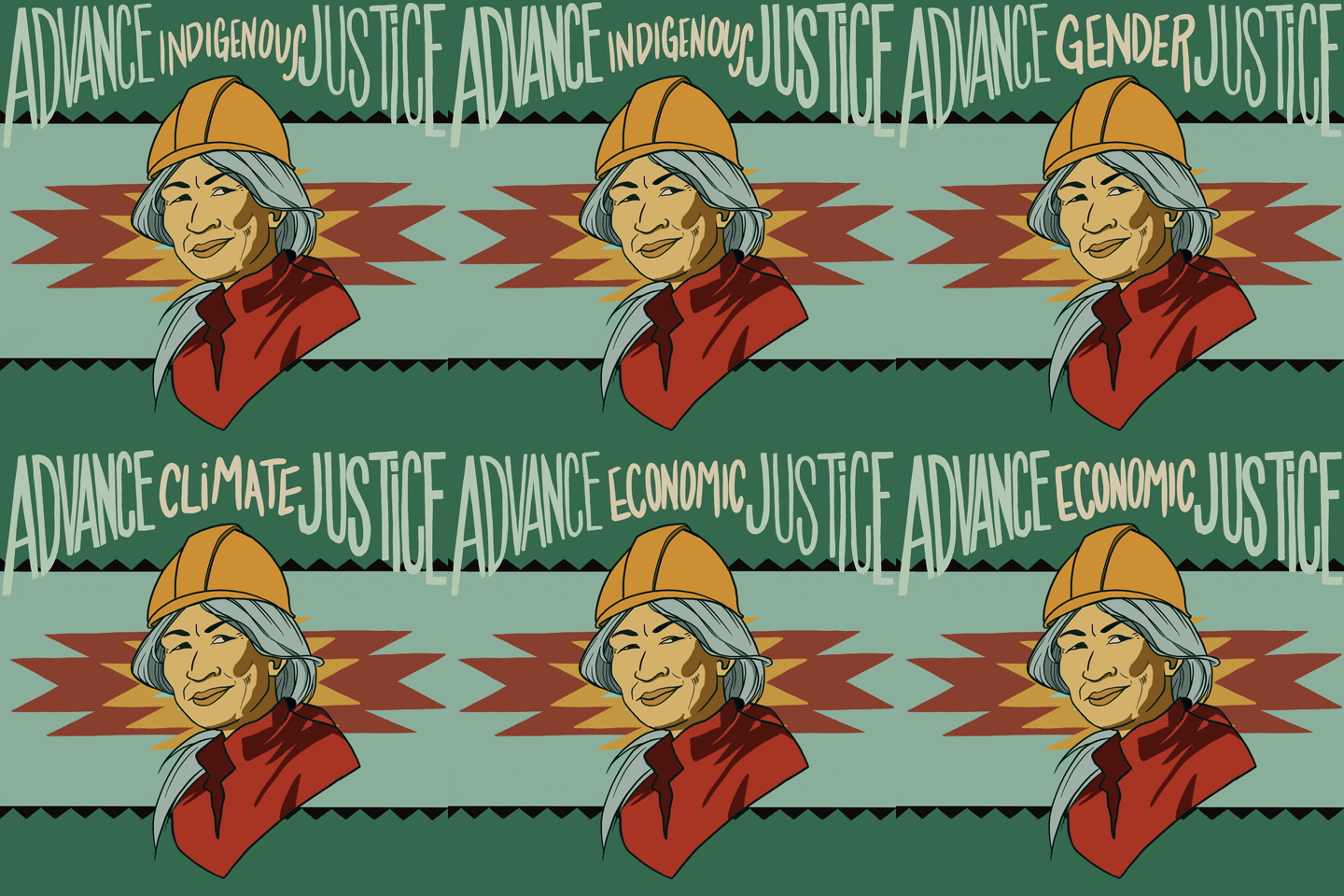
Image from the Native American Rights Fund Annual Report 2020 (Cara Romero)


THE MINER’S CANARY | 5.21.21


It’s graduation season and the ceremonies aren’t on Zoom. How’s that for transitioning into what many are calling a “new normal” (as opposed to just “normal”) in this post-ish pandemic? That certainly fits the theme of this week’s newsletter: change - and for the better.

This week, one of the dustiest, whitest institutions in the United States turned a historic corner. For the first time, the American Law Insitute and its members approved the Restatement of the Law of American Indians. I know what you’re thinking - boring, Jenni. Who wants to read about dry legal treatises? But actually, it’s a really big deal because - racism.

Ask any attorney practicing federal Indian law today and every one of them will tell you how incredibly racist the legal profession has been with regard to Indigenous justice.

The Doctrine of Discovery is the most obvious example. It centers around one of the worst cases ever decided against Indian Country: Johnson v. McIntosh. The 1823 Supreme Court decision is one of the first cases that most beginning law students read about when learning about “Property” or how the United States got the land. As the decision spells out, Indian tribes had the right to occupy their territories but only the federal government held title - by right of discovery.

The American Law Institute membership (year unknown)

In the newly-approved Restatement, the reporters note that the Discovery Doctrine is based on “presumed Christian superiority.” That’s a pretty bold line considering the ALI membership is overwhelmingly white and male - an institution that will celebrate its centennial in two years. In other words, it only took 98 years for the legal canon to recognize the importance of federal Indian law - and with the courage to accept what it has long rejected.

“Many of these principles have been around since the founding of the United States and really since the beginning of the constitutional era in 1789, but they are not necessarily well known,” said Matthew Fletcher, one of three ALI Reporters who has been drafting the restatement since 2012. Fletcher is a tribal citizen of Grand Traverse Band of Ottawa and Chippewa Indians.

Another reporter behind the restatement, Kaighn Smith, Jr., pointed out some glorious irony to me. When the drafting of the document was just being discussed for the first time nearly a decade ago, the talks took place at Washington D.C.’s Mayflower Hotel in a ballroom named the “Colonial” room. Can’t script that kinda bizarre any better.

For the longest time, the Native American Rights Fund (NARF) was all there was to respond to the legal crises facing Indian Country (that is, armed with the foundation laid by the great Felix S. Cohen.) Now, with every graduation, there are more Indian lawyers than ever before…

  • Here’s a short film I produced in 2008 about the legacy of NARF (made with ❤️)

  • An Indian Law 101 from Angela Riley at the Supreme Court, introduced by RBG

  • Justice Ginsburg’s less-than-ideal track record on Indian law cases

  • And her pal, Antonin Scalia, who may or may not have said this

  • And I’ve updated the Indigenously bookshelf with some essential texts

One book you’ll find in the list comes from Walter “Bunky” Echohawk who spoke with me the day I visited NARF offices to consider a summer internship. I was torn between a career in federal Indian law and journalism back then. Still am…

Enjoy the weekend, friends.

Jenni


THE INDIGENOUS INTERNET


@creative-courage


INDIGENOUSLY INDEX


Number of years since the American Law Institute was founded: 98

Total years to approve the first Restatement of the Law of American Indians: 98

Number of authorized federal judgeships in the United States: 890

Total positions currently filled by Native American judges: 2 

Since 1789: 3

Number of Native American judgeship nominees suggested by President Biden: 1

Number of federal judges appointed by Donald Trump: 229 

Total appointees who are white and male: 148

Percentage of Native attorneys who reported experiencing race-based harassment: 40%

Number of new election laws in Montana central to a Native voting rights lawsuit: 2

Total amount in fines per ballot for anyone collecting and/or delivering MT ballots: $100

Number of people Blackfeet Nation hired to collect and deliver ballots in 2020: 61

Total amount paid: $9,760

Number of wellness courts in Indian country: 96

Total cost for court-referred peacemaking on Oneida Nation of Wisconsin: $0


ENDORSEMENT


A fallen Christopher Columbus statue at the Minnesota State Capitol, June 10, 2020. (Evan Frost/Minnesota Public Radio)

When 57-year-old Native activist Mike Forcia learned he’d been charged with a felony for toppling a Christopher Columbus statue during the protests in Minneapolis last summer, the news was met with some potentially burdensome consequences: 5 years in federal prison and up to $10,000 in fines. But his attorney was hoping the Ramsey County Court might be persuaded to treat the crime more holistically- through restorative justice; more specifically, peacemaking. It worked. Forcia was “sentenced” to 100 hours of community service and a court-ordered acknowledgment that he broke the law and likely offended Italian-Americans.

The outcome was celebrated by the Native American Rights Fund and its Indigenous Peacemaking Initiative team. The IPI is now hosting a rare course:

“Peacemaking Circles: Indigenous Healing in Times of Conflict” (Aug. 6-8). Deadline to Apply: June 1, 2021

The downside is, it’s only open to university students (both undergrad and grad) who are enrolled for the fall semester. (But don’t let that stop you. Try! They might let us in.) 🙃


FEEDBACK


“Thank you for your newsletter. Every issue resonates so much with me.”

Pat, the Internet

Thanks for sharing, Pat. Heard from a few of you about my coverage of the Native nations in Maine. They’re absolutely the most misunderstood and off-the-radar governments in all of Indian Country (my opinion, of course).

And thank you to those of you who were so generous and kind with your donations last week! So flattered by your kind words and gifts. My appointment with my consultant is next week - he’s kinda a newsletter guru.


QUOTE


The Indigenously newsletter is produced by Jenni Monet (Laguna Pueblo)

Sign Up + Writing +Archive + Bookshelf + Email + About

instagram facebook twitter

Unceded Territorial Tewa Lands, O’ghe P’oghe (Santa Fe, NM, USA)

Unsubscribe